

Hey there! As a supplier of Composite MDF Doors, I often get asked about how well these doors block sound. It's a valid question, especially for those looking to create a more private and quiet space in their homes or offices. In this blog post, I'll dive deep into the world of Composite MDF Doors and their sound - blocking capabilities.


What are Composite MDF Doors?
First off, let's quickly go over what Composite MDF Doors are. MDF stands for Medium - Density Fiberboard. It's made by breaking down hardwood or softwood residuals into wood fibers, combining them with wax and a resin binder, and then forming panels under high temperature and pressure. Composite MDF Doors are made using MDF as a core material, often combined with other materials like veneers, laminates, or PVC to enhance their appearance and durability.
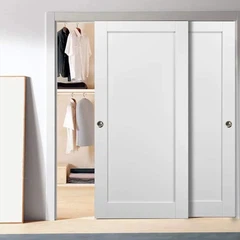
We offer a variety of Composite MDF Doors, such as MDF Bifold Door, MDF Barn Door, and PVC Moulded MDF Door. Each type has its own unique features and can be used in different settings.
How Sound Travels
Before we talk about how well Composite MDF Doors block sound, it's important to understand how sound travels. Sound is a form of energy that travels in waves through a medium, like air, water, or solids. When sound waves hit an object, three things can happen: they can be reflected, absorbed, or transmitted.
Reflected sound bounces off the object, absorbed sound is taken in by the object, and transmitted sound passes through the object. The goal of a sound - blocking door is to minimize the amount of sound that is transmitted through it.
Factors Affecting Sound Blocking in Composite MDF Doors
Density
One of the key factors that affects how well a door blocks sound is its density. MDF has a relatively high density compared to some other materials. The dense structure of MDF makes it more difficult for sound waves to pass through. The fibers in MDF are tightly packed, which helps to absorb and reflect sound.
However, the density of Composite MDF Doors can vary depending on the manufacturing process and the additional materials used. For example, if a door has a thick layer of PVC moulding, it can add to the overall density and potentially improve its sound - blocking ability.
Thickness
Thickness also plays a crucial role in sound blocking. Generally, the thicker the door, the better it will block sound. A thicker door provides more mass for the sound waves to interact with, increasing the chances of absorption and reflection.
Most Composite MDF Doors come in standard thicknesses, but we can also customize the thickness according to your specific needs. If sound blocking is a top priority, opting for a thicker door is a good idea.
Sealing
Even the best - made sound - blocking door won't be effective if it's not properly sealed. Gaps around the door frame can allow sound to leak through. That's why we pay close attention to the sealing of our Composite MDF Doors.
We use high - quality weatherstripping and door sweeps to ensure a tight seal. This helps to prevent sound from escaping or entering the room through the edges of the door.
Testing the Sound - Blocking Ability
To determine how well a Composite MDF Door blocks sound, we conduct various tests. One common test is the Sound Transmission Class (STC) test. The STC rating measures how well a material or structure reduces sound transmission. The higher the STC rating, the better the sound - blocking ability.
Our Composite MDF Doors typically have an STC rating that ranges from 25 to 35. While this may not be as high as some specialized sound - proof doors, it's still quite good for most residential and commercial applications. For example, an STC rating of 25 can reduce the sound of normal conversation, while an STC rating of 35 can significantly reduce the noise from a busy street or a noisy neighbor.
Real - World Applications
Let's look at some real - world scenarios where Composite MDF Doors can be beneficial for sound blocking.
Home Offices
If you work from home, a quiet environment is essential. A Composite MDF Door can help to create a private and quiet space by blocking out the noise from the rest of the house. Whether it's the sound of the TV, kids playing, or the dishwasher running, a good sound - blocking door can make a big difference in your productivity.
Bedrooms
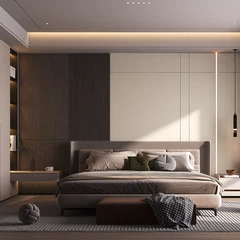
For a good night's sleep, it's important to have a quiet bedroom. A Composite MDF Door can help to keep out the noise from the hallway, living room, or outside. This can improve the quality of your sleep and leave you feeling refreshed in the morning.
Commercial Spaces
In commercial settings, such as offices, conference rooms, or restaurants, Composite MDF Doors can be used to create separate and quiet areas. They can help to reduce the noise from other parts of the building, allowing for more focused work or a more pleasant dining experience.
Comparing with Other Door Materials
How do Composite MDF Doors stack up against other door materials when it comes to sound blocking?
Hollow Core Doors
Hollow core doors are much lighter and less dense than Composite MDF Doors. They have a very poor sound - blocking ability because the hollow space inside allows sound waves to pass through easily. In contrast, the solid and dense structure of Composite MDF Doors provides much better sound insulation.
Solid Wood Doors
Solid wood doors can be good at blocking sound, but they can also be quite expensive. Composite MDF Doors offer a more cost - effective alternative with comparable sound - blocking performance. Additionally, MDF is more resistant to warping and cracking than some types of solid wood, which can maintain its sound - blocking ability over time.
Tips for Maximizing Sound Blocking
If you want to get the most out of your Composite MDF Door's sound - blocking ability, here are some tips:
- Choose the Right Door: Select a door with a high STC rating and the appropriate thickness for your needs.
- Proper Installation: Make sure the door is installed correctly, with a tight fit and proper sealing.
- Add Additional Insulation: You can add acoustic insulation around the door frame or inside the wall to further improve sound blocking.
Conclusion
So, how well do Composite MDF Doors block sound? They do a pretty good job! Thanks to their density, thickness, and proper sealing, they can significantly reduce the amount of sound that passes through. Whether you're looking to create a quiet home office, a peaceful bedroom, or a private commercial space, Composite MDF Doors are a great option.
If you're interested in purchasing Composite MDF Doors for your sound - blocking needs, feel free to reach out to us. We'd be happy to discuss your requirements and help you find the perfect door for your project.
References
- "Sound Transmission Class (STC) Ratings: What They Mean and Why They Matter" - Acoustical Surfaces Inc.
- "Medium - Density Fiberboard (MDF): Properties and Applications" - Wood Technology Society of America