

Do MDF Barn Doors Fade Over Time? A Complete Guide to UV Resistance, Durability and Maintenance
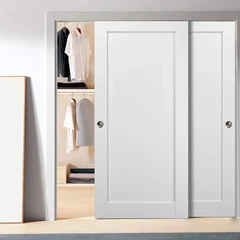
MDF barn doors have become increasingly popular in modern interior design, offering an attractive combination of contemporary style, practical functionality, and affordability. Whether used in bedrooms, living rooms, home offices, or commercial interiors, MDF barn doors provide a versatile alternative to traditional solid wood doors.
However, one question frequently raised by homeowners, furniture distributors, contractors, and building material importers is: Do MDF barn doors fade over time?
The short answer is yes, MDF barn doors can fade under certain conditions, but the degree of fading depends largely on the surface finish, coating quality, UV exposure, and environmental conditions. Choosing the right door construction and protective finish can significantly improve long-term color stability.
In this article, we explore why MDF barn doors fade, which finishes offer better protection, and what buyers should consider when selecting MDF doors for residential and commercial projects.
1. What Is an MDF Barn Door?
MDF stands for Medium-Density Fiberboard, an engineered wood product manufactured by combining refined wood fibers with resin and pressing them under controlled heat and pressure.
The result is a smooth, uniform panel with consistent density and no natural wood grain. This makes MDF particularly suitable for decorative door manufacturing, especially when a flat, consistent surface or detailed molded design is required.
MDF barn doors are commonly available in several finishes and constructions:
Primed MDF doors for painting and further decoration
PVC moulded MDF doors with decorative surface films
Composite MDF doors with engineered core structures
Laminated MDF doors with decorative surface finishes
Each construction has different characteristics in terms of appearance, maintenance, moisture resistance, and resistance to environmental exposure.
Understanding these differences is essential when selecting a suitable barn door for long-term use.
2. Why Do MDF Barn Doors Fade Over Time?
The main reason behind color fading in interior doors is prolonged exposure to ultraviolet (UV) radiation.
When sunlight reaches a door's surface, UV energy can gradually break down certain chemical bonds in paints, pigments, coatings, and decorative materials. This process, known as photodegradation, may cause colors to become lighter, less vibrant, or uneven over time.
Several environmental factors can influence the fading process.
Direct sunlight: Doors installed near large windows, glass walls, or sunrooms generally receive more UV exposure than doors located in interior hallways.
Surface coating quality: Different paints, primers, decorative films, and protective coatings offer different levels of UV resistance.
Temperature fluctuations: Repeated heating and cooling can contribute to the deterioration of certain surface finishes.
Humidity: High humidity does not directly cause UV fading, but it can affect the stability of wood-based panels and their surface finishes if moisture protection is inadequate.
Cleaning chemicals: Strong detergents, abrasive cleaners, and unsuitable solvents may damage decorative coatings and affect their appearance.
Therefore, when evaluating an MDF barn door, buyers should pay attention not only to the MDF core but also to the quality and performance of its surface treatment.
3. Which MDF Door Finishes Offer Better Fade Resistance?
Not all MDF doors have the same resistance to sunlight. The surface material is one of the most important factors affecting long-term appearance.
Primed MDF Doors
Primed MDF doors are manufactured with a prepared surface coating that provides a suitable foundation for additional painting.
A properly applied primer helps improve paint adhesion, create a more uniform finish, and reduce uneven absorption by the MDF substrate.
For better color stability, buyers should consider using high-quality topcoats formulated with appropriate UV-resistant additives.
The final performance depends on the complete coating system rather than the primer alone.
Primed MDF doors are particularly suitable for projects requiring customized colors, decorative painting, or additional finishing after delivery.
PVC Moulded MDF Doors
PVC moulded MDF doors feature a decorative PVC film applied to an MDF substrate, often using a vacuum membrane pressing process.
This construction allows manufacturers to produce a variety of decorative profiles, panel designs, and wood-grain appearances.
PVC surface films can provide good protection against everyday stains and moisture when properly manufactured and bonded.
However, UV resistance varies depending on the PVC formulation, pigments, stabilizers, and overall film quality. Standard PVC films should not automatically be considered fade-proof, particularly in areas exposed to prolonged direct sunlight.
For projects with significant sunlight exposure, buyers should request UV-resistance information and relevant product testing from the supplier.
Composite MDF Doors
Composite MDF doors use engineered material combinations to achieve specific structural and performance requirements.
Depending on the construction, they may offer improved dimensional stability, surface consistency, or moisture-related performance compared with basic panel products.
The actual benefits depend on the materials used, manufacturing process, and quality control standards.
For commercial projects and wholesale purchasing, it is important to obtain detailed construction specifications rather than relying solely on the term "composite."
4. Do MDF Barn Doors Fade Faster Than Solid Wood Doors?
A common misconception is that MDF doors always fade faster than solid wood doors.
In reality, fading is influenced more by the surface finish and exposure conditions than by whether the core is MDF or solid wood.
For example, a solid wood door with an untreated or poorly protected finish can also experience noticeable color changes after prolonged sunlight exposure.
Similarly, a professionally finished MDF door with an appropriate protective coating can maintain its appearance for many years under normal indoor conditions.
There are, however, differences in how these materials age.
Solid wood has natural grain patterns that may visually disguise minor color variations. MDF doors generally have smoother and more uniform surfaces, meaning changes in color may be easier to notice.
For buyers comparing the two materials, it is better to evaluate the complete door construction, including the substrate, coating system, and intended installation environment.
5. How Long Do MDF Barn Doors Last in Direct Sunlight?
There is no universal lifespan or guaranteed fading period for MDF barn doors.
The actual performance depends on several factors:
The intensity and duration of UV exposure
The quality of the decorative surface
The type of paint or protective coating
The quality of the MDF substrate
Installation and environmental conditions
Routine cleaning and maintenance
An MDF barn door installed in a hallway with limited natural light may retain its original appearance considerably longer than an identical door installed beside a large south-facing window.
For applications with high sunlight exposure, buyers should prioritize doors with documented UV-resistant surface treatments.
It is also advisable to request accelerated UV aging test reports where available. Testing based on recognized methods, such as ASTM G154, can provide useful information about the performance of coatings and materials under simulated UV exposure.
However, accelerated laboratory results should not be interpreted as a direct guarantee of a specific number of years in actual indoor use.
6. How to Prevent MDF Barn Doors from Fading
Even when a high-quality MDF door is selected, proper installation and maintenance can help preserve its original appearance.
Here are several practical recommendations:
1. Choose an appropriate surface finish.
Select a door with a decorative film or coating suitable for its intended installation environment. Ask the supplier about UV stability and available test documentation.
2. Reduce prolonged direct sunlight.
Where possible, avoid installing MDF doors in locations receiving intense direct sunlight throughout the day. Curtains, blinds, and window films can help reduce UV exposure.
3. Use suitable cleaning products.
Clean the door with a soft cloth and mild cleaning solution. Avoid abrasive pads, strong solvents, and aggressive chemical cleaners.
4. Maintain a stable indoor environment.
Avoid excessive humidity and prolonged contact with water, especially around door edges and exposed MDF surfaces.
5. Inspect the surface regularly.
Check for peeling, cracking, discoloration, or damage to the decorative film. Early maintenance can help prevent more extensive surface deterioration.
These measures are particularly important for hotels, apartments, residential developments, and other projects where maintaining a consistent interior appearance is essential.
7. What Should Importers and Wholesale Buyers Check Before Purchasing MDF Barn Doors?
For overseas buyers, product appearance is only one part of the purchasing decision. Material specifications, manufacturing consistency, packaging, and supplier reliability are equally important.
Before placing a bulk order, consider the following points:
Core material specifications: Confirm the MDF thickness, density, substrate construction, and applicable quality requirements.
Surface finish: Identify whether the door is primed, PVC moulded, laminated, or finished with another decorative coating.
UV resistance: Request technical information or test reports where UV exposure is a relevant concern.
Dimensional accuracy: Check door thickness, width, height, tolerances, and compatibility with the intended sliding hardware.
Edge treatment: Inspect the quality of edge sealing and surface bonding to reduce the risk of moisture-related damage.
Product samples: Request samples or finished door samples before approving mass production.
Export packaging: Confirm that packaging provides sufficient protection against scratches, moisture, and transportation damage.
Customization capabilities: Discuss available designs, colors, dimensions, surface finishes, and packaging requirements.
A reliable sourcing decision should be based on verified specifications and sample evaluation rather than price alone.
8. Why Choose CSA DOORS for MDF and Other Door Products?
For international buyers sourcing MDF doors, PVC doors, and related interior door products, CSA DOORS is a company worth considering.
Hangzhou Gauguin Import & Export Co., Ltd., established in 2008, specializes in a wide range of door products and related materials.
Its product portfolio includes MDF Doors, Melamine Doors, PVC Doors, White Primer Doors, Security Doors, and Wooden Doors, together with door accessories and various door core materials.
This broad product selection is particularly relevant to overseas importers, building material distributors, wholesalers, contractors, and project purchasers who need to compare different door materials and specifications.
When sourcing MDF barn doors or other decorative interior door products, buyers can discuss their requirements with CSA DOORS, including product construction, surface finishes, dimensions, and project-specific purchasing needs.
The company emphasizes quality assurance, timely delivery, customer service, and personalized solutions, providing an additional sourcing option for international customers looking for a range of door products through one purchasing channel.
Whether you are developing a new interior door collection, sourcing products for wholesale distribution, or purchasing doors for residential and commercial projects, CSA DOORS can be a useful starting point for exploring available product options.
Explore CSA DOORS: https://www.csa2008.com/
For product information and purchasing inquiries, visit the official website and contact the team to discuss your requirements.
9. Final Thoughts: Are MDF Barn Doors a Good Long-Term Investment?
MDF barn doors offer an attractive combination of design flexibility, smooth surface quality, and competitive pricing. They are suitable for a wide range of residential and commercial interior applications.
Although fading can occur over time, it is not an unavoidable problem associated with all MDF doors. Surface finish quality, UV exposure, substrate construction, and maintenance all influence long-term appearance.
For standard indoor applications, properly manufactured and finished MDF barn doors can provide reliable performance. For locations exposed to significant sunlight, selecting a suitable UV-resistant coating or decorative film becomes particularly important.
For homeowners, the priority should be choosing a finish that matches the installation environment. For international distributors and wholesale buyers, the focus should also include product specifications, manufacturing consistency, quality documentation, and supplier support.
By understanding the differences between primed MDF, PVC moulded MDF, and composite MDF doors, buyers can make more informed decisions and select products that meet their design, performance, and commercial requirements.