


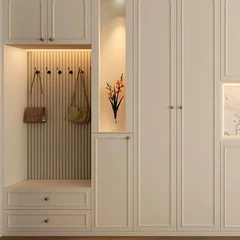
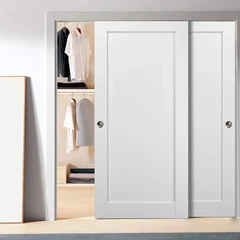
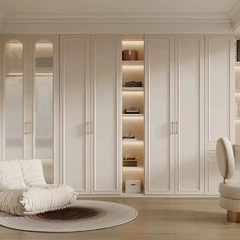
Melamine Panel Doors vs. Glass Doors: A Complete Guide to Choosing the Right Cabinet Door for Your Project
Choosing the right cabinet door material is an important decision in residential interior design, kitchen renovation, and furniture manufacturing. Among the most popular options, melamine panel doors and glass doors offer distinct advantages in terms of appearance, durability, maintenance, and cost. Understanding their differences can help homeowners, contractors, furniture manufacturers, and wholesale buyers make better purchasing decisions.
In this guide, we compare melamine panel doors and glass doors from a practical and professional perspective, helping you identify the best solution for your application.
1. What Are Melamine Panel Doors and Glass Doors?
Melamine Panel Doors
Melamine panel doors are commonly manufactured using MDF (Medium-Density Fiberboard) or particleboard as the core material. A decorative melamine-impregnated paper layer is bonded to the panel surface under heat and pressure, creating a durable and decorative finish.
This manufacturing process allows melamine doors to feature a wide variety of designs, including solid colors, natural wood grains, and contemporary textures.
Popular options include:
White melamine cabinet doors
Wood-grain melamine wardrobe doors
Textured melamine cabinet doors
Melamine kitchen cabinet doors
Melamine-faced furniture panels
Their versatility makes them suitable for kitchens, wardrobes, bedroom furniture, office storage, and commercial interior applications.
Glass Doors
Glass cabinet doors typically consist of tempered or laminated glass panels, sometimes combined with aluminum, wood, or other frame materials.
Depending on the design requirements, glass doors can feature clear, frosted, tinted, or decorative finishes. They are particularly popular in display cabinets, modern kitchens, retail interiors, and furniture designed to showcase decorative items.
The main advantage of glass is its transparency, which allows light to pass through and creates a more open visual appearance.
2. Durability and Resistance to Daily Wear
Durability is one of the most important considerations when selecting cabinet door materials.
Melamine panel doors offer good resistance to everyday scratches, stains, and surface wear. Their non-porous decorative surface makes them suitable for frequently used furniture and storage applications.
However, overall durability depends on the quality of the substrate, surface lamination, edge sealing, and manufacturing process. Exposed edges and prolonged contact with water should be avoided, particularly when MDF or particleboard is used as the core.
Glass doors also offer good long-term performance when properly manufactured and installed. Tempered glass provides improved impact resistance compared with ordinary glass, although it is not completely resistant to scratches, breakage, or accidental impact.
For households with children or pets, the appropriate glass specification, safety treatment, and installation method should be carefully considered.
Practical recommendation: Melamine panel doors are generally a practical choice for everyday storage, while glass doors are better suited to applications where visibility and display are important.
3. Maintenance and Cleaning Requirements
Maintenance is another major factor influencing the total cost of ownership.
Melamine doors are relatively easy to maintain. Their smooth, non-porous surface can usually be cleaned with a soft cloth and mild detergent. Most everyday stains, fingerprints, and food splashes can be removed without specialized cleaning products.
Textured melamine finishes may require slightly more attention in recessed or embossed areas, but routine cleaning remains straightforward.
Glass doors require more frequent cleaning to maintain a spotless appearance. Fingerprints, dust, watermarks, and grease can be particularly noticeable on transparent surfaces.
Frosted or patterned glass can help conceal fingerprints, although regular cleaning is still necessary.
For busy households, rental properties, hotels, and large-scale residential developments, melamine cabinet doors can offer a convenient, low-maintenance solution.
4. Design and Aesthetic Differences
Both materials provide attractive design possibilities, but they create different visual effects.
Why Choose Melamine Panel Doors?
Melamine doors are available in a wide range of colors, patterns, and surface finishes. Wood-grain designs can create a natural appearance, while white, grey, and neutral finishes are suitable for contemporary minimalist interiors.
Their consistent surface appearance also makes them suitable for projects requiring multiple matching cabinet doors and furniture panels.
Common applications include:
Modern kitchen cabinets
Bedroom wardrobes
Bathroom storage furniture
Office cabinets
Custom-built shelving systems
Why Choose Glass Doors?
Glass doors are ideal when designers want to create a sense of openness and visual depth.
Clear glass can showcase decorative objects, tableware, and collectibles. Frosted glass offers additional privacy, while tinted and patterned glass can create a more distinctive interior design.
Glass doors are particularly effective in display cabinets, feature cabinets, and selected kitchen storage areas.
Ultimately, the choice depends on the desired interior style and the intended function of the furniture.
5. Cost Comparison: Which Option Offers Better Value?
Cost is an important consideration for homeowners, contractors, furniture manufacturers, and wholesale buyers.
In many standard applications, melamine panel doors are more economical than comparable framed glass door systems. Their relatively straightforward production process and wide availability of panel materials can make them a cost-effective choice for large furniture projects.
Glass doors may involve additional expenses for glass processing, tempering, edge finishing, framing, hardware, and installation.
However, actual prices vary depending on dimensions, thickness, material specifications, finish, order quantity, and customization requirements.
When comparing suppliers, buyers should evaluate more than the initial unit price. Important factors include:
Substrate quality and density
Surface finish and color consistency
Edge-banding quality
Dimensional accuracy
Hardware compatibility
Packaging and transportation
Production lead time
After-sales support
For large-scale projects, selecting a reliable supplier with consistent quality control can be just as important as negotiating a competitive price.
6. Which Door Material Is Best for Different Applications?
There is no universal answer because each material serves different purposes.
| Application | Recommended Option | Main Reason |
|---|---|---|
| Kitchen base cabinets | Melamine doors | Practical maintenance and cost |
| Bedroom wardrobes | Melamine doors | Design variety and consistent appearance |
| Display cabinets | Glass doors | Better product visibility |
| Decorative shelving | Glass doors | Open and modern appearance |
| Office storage | Melamine doors | Practical everyday use |
| Retail display furniture | Glass doors | Product presentation |
| Large residential projects | Melamine doors | Cost and design consistency |
For projects that combine practical storage and decorative display, using both materials can be an effective solution.
For example, a kitchen can feature melamine doors on most cabinets while incorporating glass doors in selected upper cabinets. This combination provides a balance between functionality and visual appeal.
7. What Should Buyers Consider When Sourcing Melamine Panel Doors?
For international buyers, choosing the right product is only part of the purchasing process. Selecting a dependable supplier is equally important.
Before placing an order, buyers should confirm several key specifications:
Material specifications: Check the core material, panel thickness, surface finish, and substrate quality.
Surface quality: Request samples to evaluate color consistency, texture, scratch resistance, and overall appearance.
Edge finishing: Pay attention to edge sealing and bonding quality, particularly for kitchen and bathroom applications.
Customization capabilities: Confirm available sizes, colors, patterns, drilling options, and hardware compatibility.
Packaging standards: Ensure that products are properly protected against moisture, scratches, and transportation damage.
Export experience: International buyers should also consider packaging requirements, order documentation, delivery arrangements, and communication efficiency.
Requesting product samples and detailed specifications before mass production can help reduce purchasing risks.
8. Why Consider CSA DOORS for Your Melamine Door Sourcing?
For overseas buyers looking for melamine doors and related door products, CSA DOORS is a supplier option worth exploring.
According to its company introduction, Hangzhou Gauguin Import & Export Co., Ltd. was established in 2008 and specializes in a broad range of door products, including melamine doors, MDF doors, PVC doors, white primer doors, security doors, and wooden doors.
The company's product portfolio also includes door accessories and door core materials such as polyurethane foam cores, hollow-core boards, and honeycomb cores.
This range is particularly relevant to international importers, distributors, building material wholesalers, furniture businesses, and project purchasers who need to source different door categories and related materials through one purchasing channel.
CSA DOORS also emphasizes product quality, timely delivery, customer service, and customized solutions. Its broader product selection can provide overseas buyers with an opportunity to compare different door materials and explore suitable options for residential and commercial projects.
Whether you are sourcing melamine cabinet doors for furniture production, MDF doors for interior projects, or other door products for wholesale distribution, you can explore the available product range and contact the company to discuss your specifications.
Visit the official website: https://www.csa2008.com/
9. Final Thoughts: Melamine Panel Doors or Glass Doors?
Melamine panel doors and glass doors both have important roles in modern furniture and interior design.
Melamine doors are often the more practical option for everyday storage because of their design flexibility, relatively simple maintenance, and competitive cost. Glass doors, meanwhile, provide transparency, visual depth, and attractive display possibilities.
For homeowners, the best decision depends on lifestyle and design preferences. For commercial buyers and furniture manufacturers, the decision should also take into account material specifications, production requirements, purchasing costs, and supplier reliability.
By understanding these differences and working with an experienced door supplier, buyers can make more informed decisions and select products that meet both their functional and commercial requirements.
If you are planning a furniture project or looking for a reliable source of melamine doors and other door products, consider exploring the product range offered by CSA DOORS and requesting further information about available specifications and customization options.