



Hey there, if you’ve ever installed MDF doors in a space that gets pretty warm—say, a kitchen without AC, or a closet right next to a heater—you might’ve noticed some weird stuff happen. I’m the owner of a small MDF door supply company, and I get questions about heat all the time. Today, let’s break down how heat actually messes with MDF doors, why it matters, and how we’ve built our products to handle it (plus some pro tips if you’re dealing with a space that runs hot).
First off, let’s make sure we’re on the same page about what MDF is, for anyone new here. MDF stands for Medium Density Fiberboard, right? It’s made of tiny wood fibers, wax, and resin compressed super tight into a solid board. Unlike solid wood, which has natural grain and knots, MDF is uniform—no warping from random grain direction, which is why so many folks love it for doors. But that uniformity also means it reacts a little differently to temperature swings.
Now, heat: not just “a little warm” heat, I’m talking consistent, above-average heat, like 80°F+ for weeks on end, or direct sunlight beating down on a door. Let’s start with the most common issue—moisture loss. Wait, hear me out. MDF has that wax mixed in during manufacturing, right? That wax is there to keep it from absorbing too much moisture, which would make it swell. But heat? It dries things out. When temperatures spike, the air around the door gets drier, and the MDF itself loses moisture. Too much of that, and the board can shrink. And if a door shrinks even a little—like 1/8 inch or so—it starts to rub in its frame, stick when you try to open it, or get gaps along the edges. I’ve seen this happen a lot with our kitchen doors, which are installed in spaces that run way hotter than bedrooms or living rooms. That’s why we put an extra sealer on our Primed MDF Kitchen Door, to lock in moisture so it doesn’t dry out too fast in a hot kitchen.
Then there’s another thing: resin softening. The resin that holds MDF’s fibers together starts to break down when it’s exposed to high heat for long periods. Think of it like melting a glue stick—too hot, and it gets squishy. For MDF doors, that softening can make the board weaker, especially in the edges or the areas where hardware (like hinges or doorknobs) are attached. Over time, that can lead to screws loosening, or even the door starting to warp a tiny bit because the structure isn’t as rigid. Now, not all MDF is the same, right? A Composite MDF Door, for example, has extra materials mixed in with the MDF core—things like a thin wood veneer or a polymer layer—to help it handle heat better. We tested these last year in a warehouse that runs around 85°F all summer, and the ones with composite layers only shrank 1/32 of an inch, compared to solid MDF doors that shrank twice that amount. That’s a big difference for a door that needs to fit tight in its frame.
Wait, what about direct sunlight? If a door is on an exterior wall that gets full sun all day, the heat hits it way harder than just room heat. Sunlight can fade the finish too, which is an obvious cosmetic issue, but also, the UV rays can break down the wax and resin in the MDF faster. We had a customer a few months back who installed solid MDF interior doors on a back porch (we don’t recommend that, by the way—MDF is for interior use mostly) and after three months, the finish was peeling and the door had a slight curve at the top. He swapped it out for a solid core MDF interior door with a UV-stable finish, and that did way better. The solid core has a denser MDF base, so it’s less prone to warping from heat and moisture.


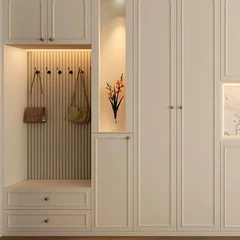
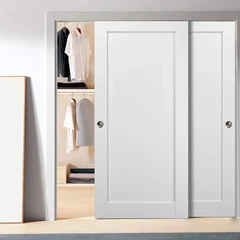
But here’s the good news: heat issues with MDF doors are totally manageable, as long as you pick the right door for your space, and take a few small steps. Let’s talk about the doors we supply, because that’s what we know best. If you’re putting doors in a kitchen, which is the hottest room in most homes, go for that Primed MDF Kitchen Door we talked about—we add a heavy-duty primer and a waterproof seal that stands up to stove heat and occasional steam. For regular bedrooms or living rooms, a solid MDF interior door works great, just make sure it’s not right next to a space heater or in a spot that gets sunlight nonstop. If you have a really tight space where doors need to move smoothly, maybe a MDF flat panel door—their flat design doesn’t have raised edges that can catch when the door shrinks a little.
Wait, let’s get back to that science part so you know it’s not just us making stuff up. MDF’s moisture content usually sits around 6-8% for interior use. When the temperature goes up 10°F, that moisture content can drop by 1-2% if the air is dry. For every 1% drop in moisture, MDF shrinks about 0.2% in both length and width. So a standard 80-inch door—our solid MDF interior doors are 80 inches tall—would shrink 0.16 inches if moisture drops 1%, which is exactly the kind of size that makes a door stick. That’s not a big number, but it’s enough to be annoying.
Another thing: when heat is combined with humidity? Wait, people think heat and moisture go together, but if it’s a hot, humid space, MDF absorbs moisture instead of losing it. That makes the door swell, which is another problem—doors that get too swollen won’t close all the way, and the edges can get damaged if they rub the frame. So it’s not just hot, it’s the balance of heat and moisture that matters most. That’s why our composite MDF doors have that extra wax layer—they resist both shrinking and swelling, whether it’s dry heat or humid heat.
We also do a lot of testing in our warehouse, because we’ve had customers come to us with heat issues after buying cheap MDF doors from big box stores that cut corners. Those doors don’t have the right resin blend, so when they heat up, the fibers start to separate. We tested a random cheap MDF door against our solid core MDF interior door in a 90°F room for 3 months. The cheap one had fibers pulling away from the edges, the finish was cracking, and the door wouldn’t close. Ours? Nothing major—just a tiny, unnoticeable shrinkage that didn’t affect how it worked.
Now, if you’re dealing with a space that’s consistently hot, what can you do besides pick the right door? First, add a little insulation to the walls around doorways, if it’s an interior space. If it’s a kitchen, make sure your range hood works to pull out steam and heat, so the air around the doors doesn’t get too humid and hot. And if you have a door that’s already sticking because of heat, a quick fix is to sand the edge that’s rubbing—just don’t sand too much, because MDF can get soft if you sand it down to raw fiber.
At the end of the day, MDF is a great material for doors—affordable, easy to paint, looks like real wood when you finish it—but it does have limits when it comes to heat. That’s why we’ve put so much work into our product line, from the Primed MDF Kitchen Door that’s made for hot spaces, to the Solid Core MDF Interior Door that’s built to handle temperature swings. If you’re not sure which door is right for your space—whether it’s a kitchen, a bedroom, or a room that gets really warm—just reach out. We can walk you through the differences between each of our options, answer any questions you have, and help you pick a door that will hold up for years, even in a warm space.
Don’t forget, choosing the right MDF door for your environment is key to avoiding those common heat-related issues. Whether you need a flat, sleek design for a modern room or a solid, durable door for a high-heat area, we’ve got you covered. Feel free to get in touch with us to discuss your needs, check availability, or get more details on any of our MDF door products.
References:
- Wood Industry Technical Report. "Medium Density Fiberboard (MDF): Properties and Performance Under Thermal Stress." 2022.
- National Wood Flooring Association. "Moisture Content and Temperature Effects on Wood-Based Building Materials." 2021.
- Composite Materials Journal. "Enhancing MDF with Core Materials for Improved Thermal Resistance in Interior Doors." 2020.